.svg)
BUNIONS
While some bunions cause only mild discomfort, others can interfere with daily activities, shoe choices, and overall quality of life. No matter how long you’ve had a bunion, relief is possible. Our physicians offer a wide range of treatment options, both surgical and non-surgical, to restore comfort and function. You don’t have to live with bunion pain—contact us today to explore your options.
You may have a BUNION
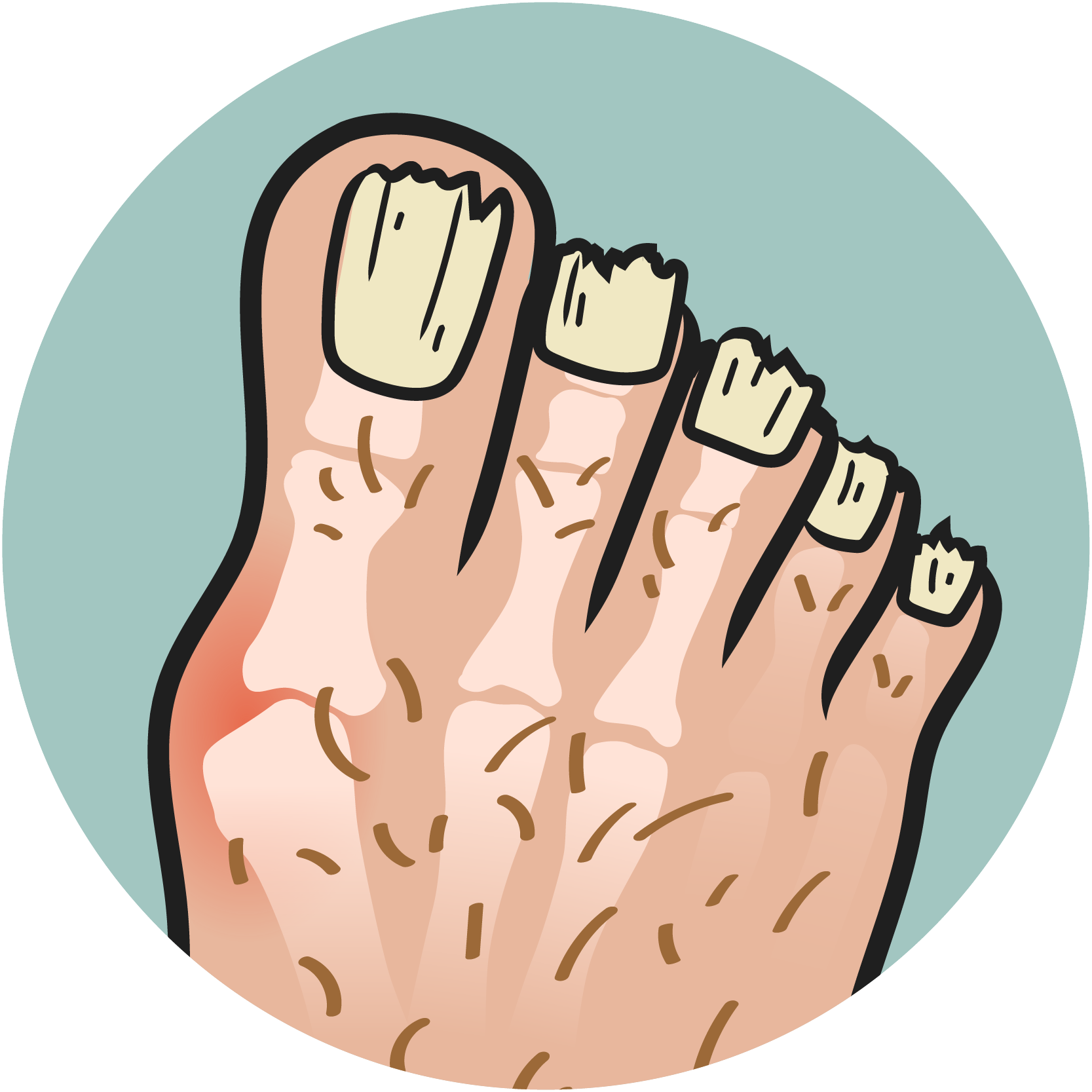
If you notice a bump forming along the side of your foot near the base of your big toe, you may have a bunion.
What are Bunions?
A bunion (medically called hallux valgus) is a bony bump at the big toe joint caused by misalignment of the bones and joint. This misalignment makes the side of the big toe joint protrude, leading to pain, irritation, and changes in foot shape. Bunions are progressive, meaning they often worsen over time, which is why early diagnosis and proper care are so important.
What causes Bunions?
Bunions often develop from a combination of factors, including:
- Genetics: Inherited foot shape or structure
- Foot structure: Flat feet, hypermobile joints, muscle imbalances, or abnormal bone structure can contribute
- Footwear: Shoes that are too tight, narrow, or high-heeled can worsen and irritate the bunion
- Arthritis: Inflammatory conditions like rheumatoid arthritis may increase the likelihood of bunions
MAY BE CAUSED:
01
YOUR BIG TOE
Your big toe leaning toward your other toes
02
PAIN
Pain or soreness when walking or wearing shoes

03
REDNESS
Redness, swelling, or skin irritation at the big toe joint

04
COMFORT ISSUES
Difficulty finding shoes that fit comfortably

If these symptoms sound familiar, schedule an appointment with our team for a comprehensive foot exam and custom treatment plan.
Part of your bunion treatment plan is identifying the root cause, which allows us to provide the right solution to relieve your pain and slow the progression of the bunion.
Symptoms
Bunions can vary in severity, but common symptoms include:
- Ongoing pain, aching, or throbbing in the joint
- Swelling or redness around the joint
- Thickened skin, calluses, or corns where the toes rub together or shoes press on the skin
- Restricted movement in the big toe
- Changing how you walk to avoid pressure to the area
HOW DO YOU TREAT a BUNION?
Proper Footwear
Shoes with roomy toe boxes
Padding, Splints & Orthotics
To relieve pressure and correct malalignment
Anti-Inflammatory Medications
To reduce pain and swelling, including topical, oral, or injectable options
Surgical Options
Surgical techniques realign the bones and restore function, helping prevent the bunion from coming back. There are different ways to surgically correct a bunion. Our podiatrists will discuss whether surgery is right for you and which surgery is best for you.
BUNIONS FAQ
Will bunions go away on their own?

When should I see a doctor?
If I have surgery for my bunion, what should I expect?
Can children get bunions?