.svg)
INGROWN
TOENAIL
Your SUMMIT provider will inspect your symptomatic toenail and surrounding skin at the edge of the nail to see if the nail is ingrown. Depending on the severity and symptoms they will develop a tailored treatment plan.
You may have an ingrown toenail
Don’t worry, there is relief! Our permanent removal process procedures have less than 10% recurrence rate and will quickly get you back to adventures without pain.
What is an Ingrown Toenail?
An ingrown toenail is a condition caused by pressure from the toenail edge impeding with the skin of your toe. This condition is typically found in the big toe, however, any of the toes can be affected. Ingrowns can cause pain and discomfort that can affect daily functions and activities, like wearing shoes, and walking.
What Causes Ingrown Toenails?
Ingrown toenails are most commonly caused by improper trimming of the toenail and improper shoe fittings. They can also be caused by genetic or inherited conditions, toe injuries, and a number of foot diseases or deformities.
Do I have an Ingrown Toenail?
You may have an ingrown nail if you have:
01
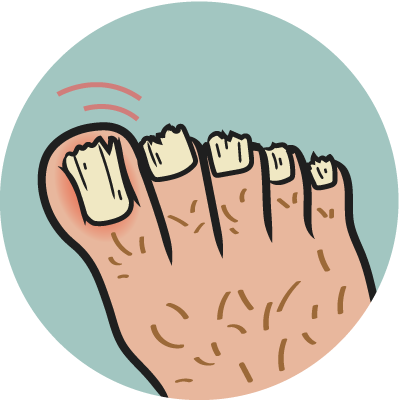
A SWOLLEN TOE
02
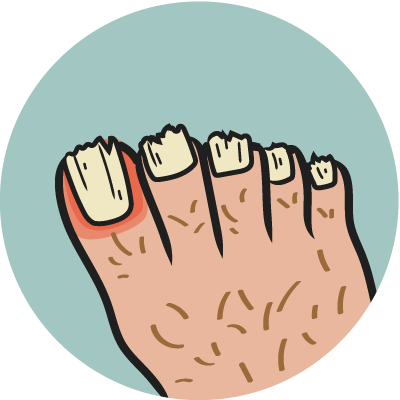
REDNESS OF THE SKIN AROUND THE NAIL
03
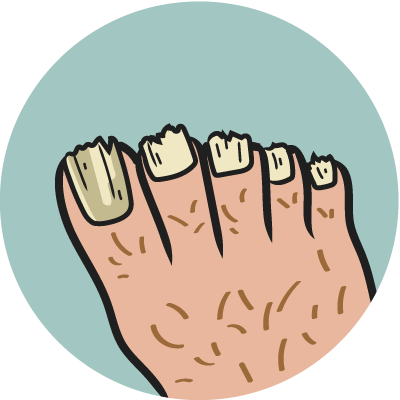
NAIL DISCOLORATION
04
DRAINAGE FROM THE NAILFOLD

Symptoms
- Pain: Pain typically starts at the edges of the toe and can expand all the way up to the base of the toe. This pain can be very irritating and uncomfortable until the ingrown is treated.
- Infection: Ingrowns can lead to infection. Once the nail begins to break through the skin, it is prone to contamination.
- Inflammation: Swelling, inflammation, and redness in the affected toes may occur as a reaction to the nail impeding the skin.
How Do You Treat An Ingrown Toenail?
Partial Toenail Removal:
This involves removing a portion of the toenail from its nail root. The technique is designed to manage ingrown toenails by removing the entire nail edge that is cutting into the sides of the skin. In addition, a chemical can be applied to destroy the nail root completely following a partial toenail removal. This is called a partial chemical matrixectomy to prevent the nail edge from growing back.
Full Toenail Removal:
Sometimes, we have to remove the entire toenail to restore the nail. In this case, your doctor will free the toenail from the root of the cuticle and remove it for a fresh start. Full toenail removal promotes healthy new growth, addresses fungal infections and toe injuries, and ultimately reduces pain quicker than waiting for a damaged nail to grow out. As with the partial nail removal, a chemical can be applied after the total nail removal to prevent the nail from growing back.
Toenail Care:
Proper toenail care is key to preventing and managing ingrown toenails. For those prone to ingrown nails, regular professional care from a podiatrist can help prevent pain, infection, and recurring problems. Our team provides personalized guidance and treatment to keep your nails healthy and comfortable.
Antibiotics + Antifungal Medication:
Antibiotics heal infections that may develop when an ingrown occurs. We prescribe medication to help treat infections that might hinder the overall healing of the nail.
Antifungal medications help heal infections related to fungus. Our providers prescribe medication to address the needs of your specific fungal infection.Nail Cream + Lacquers:
Nail creams and medicated lacquers can help treat and prevent ingrown toenails by softening the nail and protecting the surrounding skin. These topical treatments can reduce inflammation, fight fungal infections, and make nails easier to trim properly. Used alongside professional care, nail creams and lacquers support healing, relieve discomfort, and help prevent future ingrown nails.
Common Foot Diseases that Lead to Ingrowns:
- Onychomycosis (fungal infections)
- Psoriasis (excess skin build-up)
- Xerosis (excessive dryness)
- Hyperhydrosis (excessive moisture or sweating)
- Dystrophic Nails (thickening of the toe nail)
Common Conditions that Lead to Ingrowns:
- Athletic Activities
- Abnormal Gait
- Abnormally Long Toes
- Bunions and Hammertoes
- Obesity
Prevention + Care Tips for Ingrown Toenails:
There are a number of things you can do to prevent ingrown toenails like keeping a healthy toe care routine.
- Trim your toenails straight across
- Wear properly fitting shoes with ample space around the toe
- See a podiatrist if ingrowns run in your family
Ingrown Q&A
Can an ingrown heal itself?

Can ingrowns be treated on the same day of consultation?
Will my ingrown toenail come back?
How long does it take for an ingrown to heal?
Should I come in if my toe is still red after two weeks?
Can I get my foot wet after an ingrown toenail procedure?
How can I reduce the chances of my toenail getting infected?
Hear from Our Patients
Real stories from patients who found relief, improved mobility, and got back to doing what they love with help from Summit Foot + Ankle.
Schedule Your Appointment
Ready to take the first step toward relief?
• Call us at (801) 253‒6886
• Or, fill out the form below, and a member of our team will reach out to you.
Reach the summit of foot and ankle health and step confidently into every possibility.
Our team members are excited to help you rise above foot pain. Call today!